Expert Plumbing Fairfield provides professional backflow prevention services for homes and businesses in Fairfield, CA, including installation, annual testing, and repairs. In Fairfield’s dry climate, irrigation systems run hard through long, hot summers, and every lawn sprinkler, drip line, and swimming pool sits behind real plumbing. If that equipment is not properly protected, contaminated water can flow backward into your clean water supply. We install the right device for your property, test it to make sure it works, and tell you honestly if your current setup is fine as is. No scare tactics, no upsells.
Backflow is water flowing in the wrong direction. Your drinking water and the water in your irrigation lines, pool, or commercial equipment share the same municipal supply pipes. Under normal conditions, water pressure keeps flow moving one way, from the supply into your property. But when a pressure event disrupts that balance, water can get pulled or pushed backward through cross-connections, carrying contaminants with it.
A cross-connection is any place where clean water and a possible source of contamination can meet, most commonly a lawn irrigation system tied to the household water line. Others include pool fill lines, boilers, and fire sprinkler systems. If fertilizer, lawn chemicals, or stagnant irrigation water flows back into your drinking water, the results can be serious. That is why water districts take backflow prevention so seriously.
The right device depends on the hazard level, the type of cross-connection, and what your water district expects. Here are the three main types, explained plainly:
Reduced Pressure Zone Assembly (RPZ). The RPZ is the highest level of protection for most applications: two check valves with a pressure-monitored chamber between them. If either valve fails or backflow conditions occur, the chamber opens and dumps water through a relief vent instead of letting it enter the supply. Common on commercial buildings and irrigation systems with chemical injection, RPZ assemblies install above ground where the vent can drain and typically require certified annual testing.
Double Check Valve Assembly. Two independent check valves in series. Water flows through both normally, and if flow tries to reverse, both close. It protects against low to moderate hazards and is often used on residential fire sprinkler systems and some irrigation setups. With no relief vent, it can go underground or in a vault. Double check valves generally cost less than RPZ assemblies, and we will tell you honestly when this is all you need.
Pressure Vacuum Breaker (PVB). A simpler device used mainly for residential irrigation. A spring-loaded air inlet valve opens when supply pressure drops, letting air into the line so water cannot be siphoned backward. PVBs guard against backsiphonage only, not backpressure, and must sit above the highest sprinkler head. For many Fairfield homeowners with a standard lawn irrigation system, a PVB is a practical, cost-effective choice.
Main breaks, line repairs, and heavy municipal demand can drop supply pressure enough to cause backsiphonage.
Sprinklers and drip lines are cross-connections by design. Water sitting in irrigation lines, exposed to fertilizer and lawn chemicals, is a textbook backflow risk.
A fill line or automatic fill device can push chemically treated pool water back into the supply.
Pressure buildup in boilers and commercial heaters can create backpressure against the supply line.
Water sits stagnant in these lines, so they are a standard trigger for backflow protection.
A pressure vacuum breaker for residential irrigation costs less than an RPZ assembly with a relief vent. Double check valve assemblies fall in between. We recommend the simplest device that does the job.
A straightforward installation on an accessible line is simpler than a retrofit that needs pipe rerouting, concrete cutting, or a protective enclosure.
Annual testing is separate from installation. Device count, type, and your water district's documentation requirements all factor into the cost.
A rebuild kit plus labor costs less than a full device replacement. When a device fails, we give you both options with honest numbers and let you decide.
Proper installation matters as much as choosing the right device. We install backflow prevention devices on new systems and as retrofits on existing plumbing.
Every installation starts with a look at your system. We find your cross-connections, confirm what your water district expects, and match the device to your hazard level. Then we install it to meet code requirements for height, drainage, and accessibility. RPZ assemblies go above ground where the relief vent can discharge safely. PVBs go above the highest point of the irrigation system. If the device needs freeze protection on colder winter nights, we will explain your options for enclosures or insulation.
After installation, we test the device and walk you through what was installed and why. You get a free estimate before any work begins.
Many water districts require annual testing. Check valves, springs, and seals wear out over time, and a device can look fine outside while failing silently inside. Testing, done with a calibrated gauge kit at each test port, confirms every component works as designed. Results are recorded on a test report filed with the water district. Many property owners receive a testing notice or reminder from their water provider. If you have received one, do not ignore it. Overdue devices can draw follow-up notices, and sometimes penalties.
Our backflow prevention service includes annual testing. We test the device, explain the results in plain language, and handle the paperwork your water district requires. If it passes, you are set for another year. If it fails, we can usually fix it during the same visit.
Check valves stick or fail to seat. Springs lose tension. Seals and O-rings dry out and crack. Sediment can lodge in a valve and keep it from closing. When a device fails its annual test, it needs repair or replacement.
Common repairs include rebuilding a check valve with a repair kit, replacing worn seats and seals, clearing debris from internal passages, and replacing a faulty relief valve on an RPZ assembly. We will tell you honestly whether a rebuild makes sense or the device has reached the end of its useful life. Older devices with no parts available, or ones that fail repeatedly, are usually better replaced than rebuilt.
We also fix devices that were never the right fit. If a previous installer used the wrong type, put it below grade where it cannot be tested, or left it exposed to damage, we can bring the installation up to proper standards.
Fairfield is irrigation country. Long dry summers, landscaped yards, HOA communities, and commercial properties with large turf areas mean thousands of irrigation systems tied directly into the municipal supply. Dry-season pressure events make the risk real: heavy irrigation demand, line work, and firefighting draws can all create the drops that cause backsiphonage.
Residential properties with lawn irrigation are the most common case we handle. If your sprinklers connect to your household water, you likely need a preventer on that line, and many Fairfield neighborhoods already have them. Homes with pools, spas, or water features need protection on their fill lines, and a home fire sprinkler system is another cross-connection that typically requires a device.
Commercial properties get stricter attention from water districts. Restaurants, offices, apartment complexes, car washes, medical offices, and industrial sites often have multiple cross-connections: irrigation, boilers, fire sprinklers, and process equipment. Commercial assemblies are usually larger, always need annual testing, and must be filed with the water district. We work with property managers and business owners across Fairfield to keep testing current and documentation in order.
Expert Plumbing Fairfield provides backflow prevention services throughout Fairfield, CA, including the 94533, 94534, and 94535 zip codes and the Travis Air Force Base area. We also serve nearby communities including Vacaville, Vallejo, Benicia, and Dixon. Call today to schedule your installation, annual test, or repair.
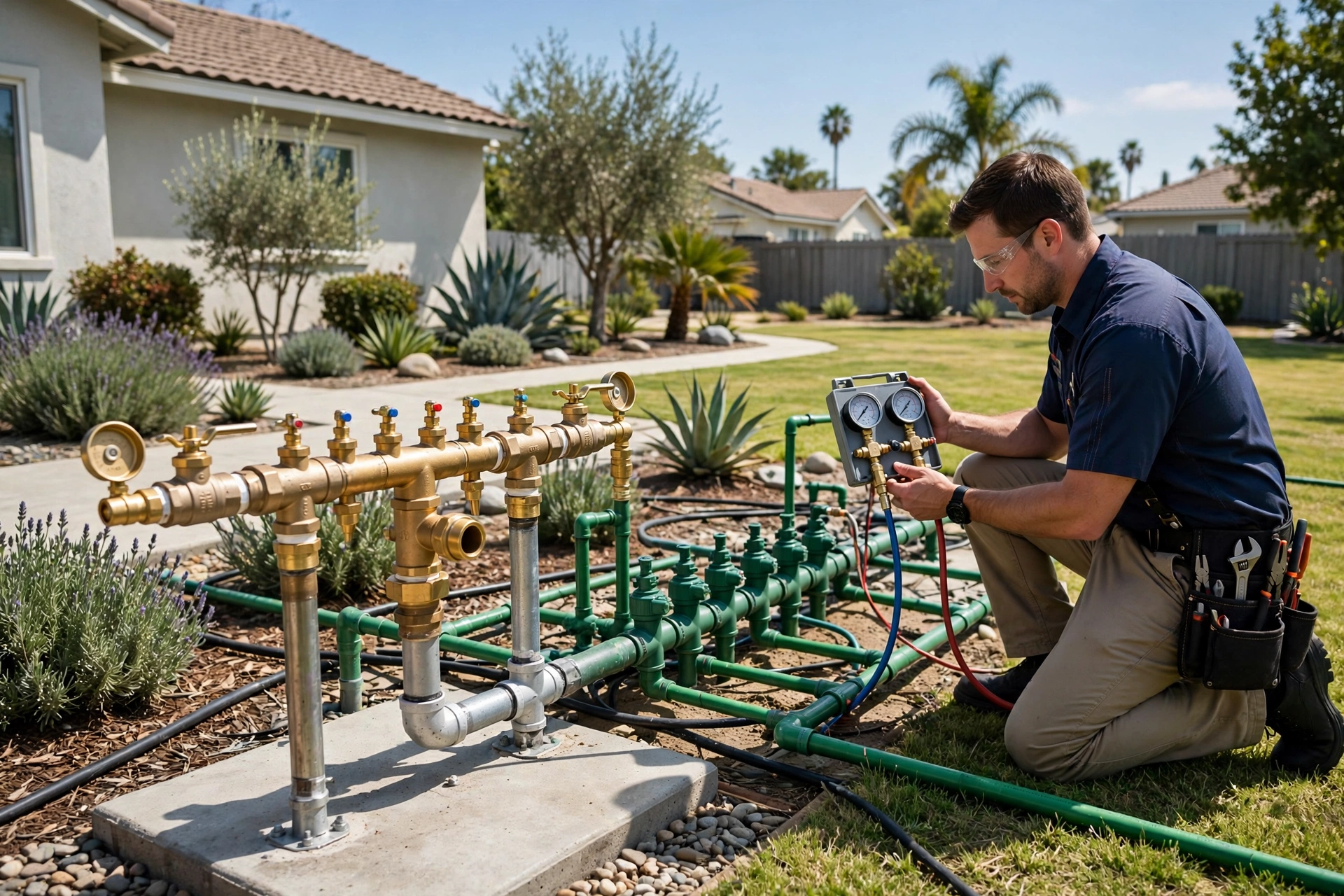
Expert Plumbing Fairfield provides professional backflow prevention services for homes and businesses in Fairfield, CA, including installation, annual testing, and repairs. In Fairfield’s dry climate, irrigation systems run hard through long, hot summers, and every lawn sprinkler, drip line, and swimming pool sits behind real plumbing. If that equipment is not properly protected, contaminated water can flow backward into your clean water supply. We install the right device for your property, test it to make sure it works, and tell you honestly if your current setup is fine as is. No scare tactics, no upsells.
A mechanical device on a water line that stops contaminated water from flowing backward into the clean water supply. Check valves, and in some designs a relief vent, allow water to flow in only one direction. When backflow conditions occur, the device closes or vents to keep your drinking water safe.
If your home has lawn irrigation, a pool with an automatic fill line, a boiler, or a fire sprinkler system connected to your household water, usually yes. Many water districts require protection on these connections and will send a notice if one is missing.
Most water districts require annual testing. Internal parts wear over time, and testing is the only way to confirm the device will work when needed. Many owners get a yearly reminder or compliance notice from their water provider. We test your device, file the results, and set up reminders so you never miss a year.
A failed test means one or more internal components are not working correctly. It does not mean your water is already contaminated. It means the device needs repair or replacement before it can be certified. We explain the results in plain language and can usually complete the fix during the same visit.
An RPZ has two check valves with a pressure-monitored relief chamber between them, and it vents water if backflow occurs. It is used for higher-hazard situations. A double check valve has two check valves in series with no relief vent, used for lower-hazard situations.
A properly sized and installed device causes only a small pressure drop, and most homeowners never notice. If pressure drops noticeably after installation, the device may be undersized or there may be debris in the valves. Call us and we will sort it out.
Your drinking water is worth protecting, and a working backflow preventer is the device that does it. Whether you received a testing notice from your water district, need a device on a new irrigation system, or want a failed assembly repaired, we are here to help.
Call +1 707 574 9715 today for fast service and a free estimate.
Business: Expert Plumbing Fairfield Hours: Mo,Tu,We,Th,Fr,Sa,Su 09:00-17:00