Water heater maintenance is a service visit that keeps your water heater running efficiently and catches small problems before they become a cold shower or a flooded utility room. It covers flushing sediment, checking the anode rod, testing the safety valves and thermostat, and inspecting the tank, connections, and venting. This page describes maintenance as a professional service you can book, not a do-it-yourself checklist: the work is done by a technician during a scheduled visit, with the findings reported to you in plain terms.
A water heater works every day, heating and holding water at temperature, and it does so inside a steel tank that is constantly exposed to water, minerals, and heat. Sediment settles, the anode rod is consumed, seals age, and small leaks start at connections long before they become visible puddles. None of that announces itself until the heater fails, and failure usually arrives as no hot water on a cold morning or a leak discovered by a damp floor.
A maintenance visit interrupts that pattern. Sediment is flushed before it hardens into a thick layer, the anode rod is replaced before the tank starts corroding, a weeping connection is tightened before it becomes a leak, and a failing relief valve is found while it is still a service item rather than a safety problem.
Fairfield water carries minerals that settle out as sediment whenever water is heated and held. Over months, that sediment forms a layer at the bottom of the tank. The layer insulates the water from the burner or heating element below it, so the heater burns more fuel or draws more power to reach the same temperature, and the tank overheats in spots. Homeowners often notice this first as rumbling or popping sounds during heating, or as hot water that runs out faster than it used to.
Flushing drains the tank and carries the sediment out with the water. The findings from the flush also set the future interval: heavy sediment points to more frequent flushing.
The anode rod is the most important part of a maintenance visit and the least known to homeowners. It is a rod of magnesium or aluminum that hangs inside the tank, and it is designed to corrode so the steel tank does not. As long as the rod has life left, the tank lining is protected. Once the rod is consumed, corrosion turns to the tank itself, and tank failure follows, often as a leak that cannot be repaired.
Checking the rod means removing it and measuring how much is left. A rod that is heavily pitted or worn down to its core wire needs replacement. Rod life varies with water chemistry and use, so there is no fixed schedule that fits every home: the check at each visit is what sets the replacement timing. Replacing a rod is a small job during a maintenance visit and a far larger saving than it appears, since it is the main factor that decides whether a tank lasts its expected span or fails early.
The temperature and pressure relief valve is the heater safety device. It opens to release water if temperature or pressure inside the tank climbs too high, preventing a dangerous buildup. During maintenance it is tested to confirm it opens and reseats cleanly. A valve that sticks, drips constantly, or shows corrosion is replaced, since a safety valve that cannot be trusted is worse than no information at all.
The thermostat is checked for its setting and for accurate control. A thermostat set too high wastes energy and risks scalding, while one that cycles poorly leaves the household with lukewarm water. Gas models get a venting check as well: the flue must carry combustion gases outside, with no blockage and no backdraft into the room. Venting problems show up as soot, a smell of combustion, or a pilot that keeps going out, and any of those should be investigated during the visit.
The visit includes a hands-on inspection of the tank exterior, the inlet and outlet connections, the drain valve, and the area around the heater. Early rust at a fitting, a slow weep at a connection, or a drain valve that no longer closes properly are all small findings with simple fixes when caught during maintenance. Left alone, each becomes a leak, and a leak in a utility room can damage flooring and stored items before it is noticed.
The inspection also covers the space around the heater: clearance for service access, a drain pan where one is fitted, and the discharge pipe from the relief valve, which must run to a safe point where hot water can escape without scalding anyone or damaging the floor. If the discharge pipe ends in an unsafe place, the technician should flag it and explain the correction needed.
Tankless heaters need maintenance too, but the work differs. With no tank, there is no sediment layer and no anode rod. Instead, mineral scale builds up inside the heat exchanger, narrowing the water passages and reducing both flow and heating performance. Descaling flushes a cleaning solution through the exchanger to dissolve that scale, and it matters most in hard water areas, where buildup is fastest.
A tankless visit also includes cleaning the inlet water filter, which catches debris before it reaches the exchanger, and checking the venting and the gas or electrical connections. A filter left clogged starves the heater of water and causes fluctuating temperatures. The descaling interval depends on water hardness and household use, and the technician can set it from what is found at each visit.
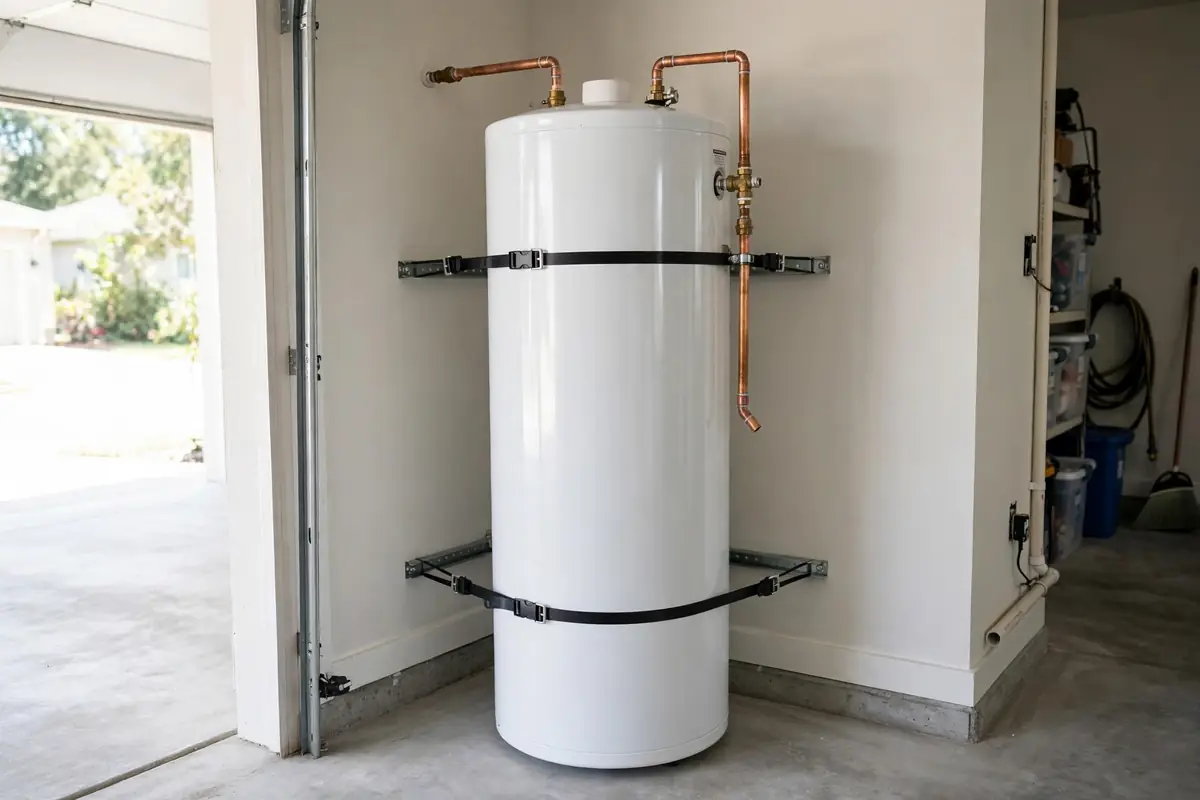
Water heater maintenance is a service visit that keeps your water heater running efficiently and catches small problems before they become a cold shower or a flooded utility room. It covers flushing sediment, checking the anode rod, testing the safety valves and thermostat, and inspecting the tank, connections, and venting. This page describes maintenance as a professional service you can book, not a do-it-yourself checklist: the work is done by a technician during a scheduled visit, with the findings reported to you in plain terms.
A maintenance visit typically includes flushing sediment from the tank, checking the anode rod, testing the temperature and pressure relief valve, checking the thermostat setting, inspecting the tank and connections for leaks or corrosion, and checking the venting on gas models. The technician reports what was found and what, if anything, needs attention.
A yearly service visit is a sensible interval for most homes. Heaters in areas with hard water, or heaters that serve a large household with heavy hot water use, may benefit from more frequent flushing, since sediment builds up faster. The technician can set the interval from what is found inside your tank at each visit.
The anode rod is a metal rod inside the tank that corrodes in place of the tank lining, protecting the steel tank from rust. It is consumed over time, and once it is gone, the tank itself starts to corrode. Checking the rod during maintenance and replacing it when it is worn is one of the most effective ways to extend a tank life.
Minerals in the water settle as sediment at the bottom of the tank. That sediment insulates the water from the burner or element, so the heater works harder and heats more slowly, and it can cause rumbling or popping noises during heating. Flushing removes the sediment, restores heating efficiency, and reduces strain on the tank.
The temperature and pressure relief valve is a safety valve that opens to release water if the temperature or pressure inside the tank rises too high. It is tested during maintenance to confirm it opens and reseats properly. A valve that is stuck, leaking, or blocked is a safety issue and should be replaced.
Yes. Tankless heaters have no tank to flush, so maintenance focuses on descaling the heat exchanger, cleaning the inlet filter, and checking the venting and gas or electrical connections. Descaling matters most in hard water areas, where mineral buildup inside the exchanger reduces flow and heating performance.
Whether your heater is rumbling, your hot water runs out too fast, or you simply want a yearly visit that keeps a working heater working, maintenance is the visit that pays for itself in avoided breakdowns. Call +1 707 574 9715 during business hours (09:00-17:00 daily) for a free estimate on water heater maintenance in Fairfield, CA. We will flush the tank, check the anode rod and safety valve, inspect every connection, and report what we found in plain terms.
For a heater that has already broken down, see our water heater repair page. For a heater being replaced, see our water heater installation page.
Business: Expert Plumbing Fairfield Hours: Mo,Tu,We,Th,Fr,Sa,Su 09:00-17:00