
Fairfield water carries a noticeable mineral load, and many homeowners first meet it as spots on dishes, soap scum that returns within days of cleaning, stiff towels, and scale on faucets and showerheads. A water softener addresses the cause rather than the symptoms: it removes the calcium and magnesium minerals that make water hard, so soap works properly, residue drops, and scale builds far more slowly in pipes and appliances. This page explains how softeners work, which types exist, how sizing works, and what installation involves in a Fairfield home.
Most home softeners use ion exchange. Hard water passes through a tank of resin beads, and the beads capture calcium and magnesium ions and release sodium ions in exchange. The water leaving the tank is soft, meaning its hardness minerals have been removed. Over time the beads fill up with hardness minerals, and the system regenerates: it flushes the beads with a salt solution, which carries the captured minerals away to drain and restores the beads for the next cycle.
Regeneration is automatic on most modern systems, and it is usually scheduled for a low-use time, such as overnight, so it does not interrupt the household. The system needs a salt supply for regeneration, a drain connection for the flush water, and, for most models, an electrical supply for the control valve. The control valve is the part that manages the cycle: it measures water use or runs on a timer, starts regeneration when needed, and controls the flow through the tank.
Two-tank systems separate the resin tank from the salt tank, while cabinet systems combine them in one unit. The choice between them is mostly about space and service access: a two-tank system is easier to service in parts, while a cabinet system fits tighter spaces. Either design can serve a home well when it is sized correctly and installed with proper drainage and access.
Hard water affects Fairfield homes in ways that go beyond spotting. Scale builds inside water heaters, where it insulates heating parts and forces the unit to work harder, and inside pipes, where it narrows the bore and catches debris. Tankless water heaters are especially sensitive, because their narrow heat exchanger passages scale up faster than a tank, and regular descaling becomes part of owning one. Appliances that heat water, including dishwashers, washing machines, and coffee makers, also wear sooner in hard water, because scale builds on heating elements and clogs small passages.
Softening protects all of those at once, because it treats the water before it reaches them. That whole-home effect is the difference between a softener and a point-of-use device: a softener at the main supply protects every tap, every appliance, and every pipe downstream of it, while a single-tap device protects only that tap. If your signs show up across the home, on dishes, laundry, skin, and fixtures alike, whole-home softening matches the pattern.
If you are still working out whether your water is hard, our guide to hard water signs in Fairfield walks through the seven signs and how to confirm hardness with a test. Testing matters because it turns a suspicion into a measurement, and it gives a baseline to judge the softener against after installation.
Sizing is the most important decision in a softener installation, and it is not about picking the biggest unit. A softener is sized from three things: the hardness of the water, the household’s water use, and the peak demand the home places on the system. Water use follows household size, bathroom count, and habits such as frequent laundry or large baths. Peak demand matters because the softener must keep up when several fixtures run at once, not just on an average day.
An undersized softener regenerates too often, uses more salt and water than it should, and may let hard water through during peak use. An oversized softener regenerates too rarely, which can allow the resin bed to sit unused for long stretches and can waste space and money. A good estimate sizes the unit from your household: how many people live there, how many bathrooms the home has, and what the water test showed, rather than from a generic chart.
Ask the installer to explain the sizing in plain terms: what hardness figure was used, what daily use was assumed, and how often the unit is expected to regenerate. If the estimate does not mention hardness or use at all, the sizing is a guess, and a guess is a poor basis for a device that should serve the home for years.
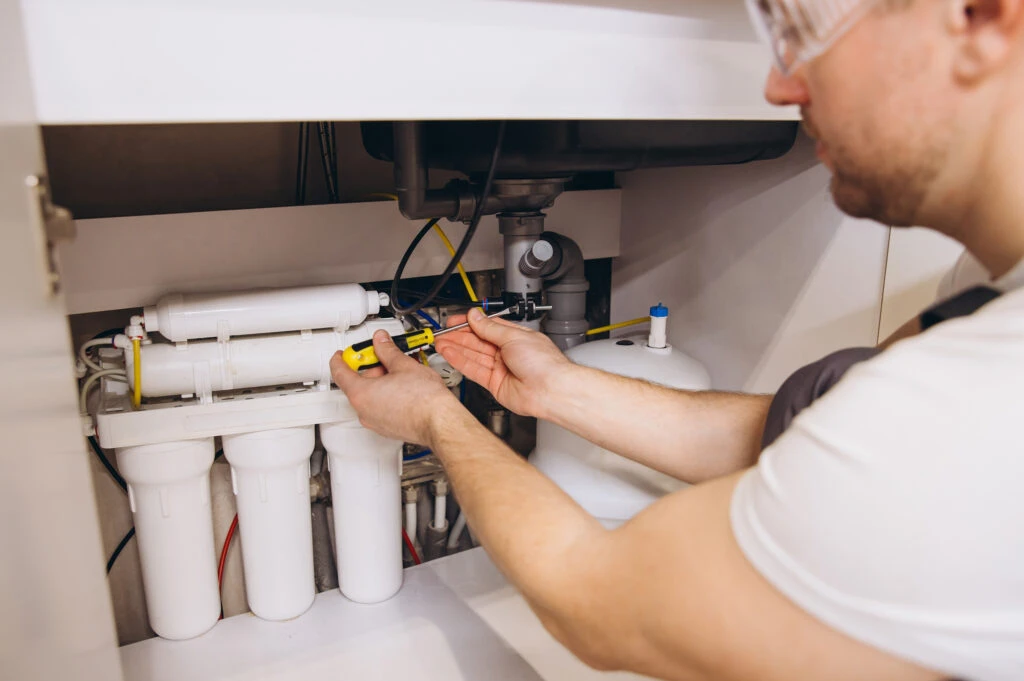
Installation starts with a water test and a look at the main supply entry, the available space, the drain options, and the electrical supply. The softener is normally fitted where the main water line enters the home, so it treats all water downstream, with a bypass valve that lets water flow around the softener when it is being serviced or if it ever needs to be taken out of service. The bypass is a practical detail that matters: without it, servicing the softener means shutting off water to the whole home.
The fitting work includes cutting into the main line, fitting the bypass and the control valve connections, running a drain line for regeneration water, and connecting power where the model needs it. After fitting, the system is tested for leaks, the control valve is programmed for the home’s hardness and use, and the first regeneration is run or scheduled. The installer should then explain the routine the household needs to follow: checking the salt level, what salt type the unit uses, and how to spot the signs that something needs attention, such as a return of spotting or a salty taste.
Space and access deserve attention before the day. The softener needs floor space for the tanks plus clearance for salt top-ups and service, a drain it can reach without long runs, and an electrical outlet where required. A cramped corner that barely fits the unit will make every salt top-up and every service visit harder, so the location should be chosen for access as well as for pipe routing.
Routine maintenance is simple but not optional. The salt level needs checking regularly and topping up before it runs out, because a softener without salt cannot regenerate, and hard water will pass straight through. The salt type matters too: the unit’s instructions will specify the form it needs, and using the wrong form can cause bridging, where a hard crust forms above the water in the salt tank and the unit stops completing its regeneration cycle properly even though salt appears to be present.
Beyond salt, the system benefits from periodic checks: the control valve settings against current use, the drain line for blockages, and the resin condition over time. Household changes, such as more people moving in or a bathroom addition, change water use, and the settings should be adjusted to match. A softener that was sized for two people and now serves five will regenerate more often, and its settings should reflect that.
Some homeowners pair a softener with filtration for sediment or taste, and that is a separate decision with its own maintenance. A sediment pre-filter protects the softener’s valve from debris, and it needs its own replacement schedule. If you already have filtration, tell the installer, since it changes the layout and the maintenance advice.
Softening removes hardness minerals. It does not remove sediment on its own, it does not disinfect water, and it does not remove every dissolved substance. If your concern is taste, sediment, or a specific contaminant, that needs a different device, and a softener sold as a cure for all of them is oversold. The honest way to choose is to test the water, name the problems the test shows, and match each problem to the device that addresses it.
Softened water also tastes different, because sodium replaces calcium and magnesium in the exchange. The amount is small, and many households do not notice it, but households that prefer to avoid it often keep one unsoftened tap, usually at the kitchen sink, for drinking and cooking. That is a straightforward fitting choice to discuss during installation, not an afterthought.
Fairfield water carries a noticeable mineral load, and many homeowners first meet it as spots on dishes, soap scum that returns within days of cleaning, stiff towels, and scale on faucets and showerheads. A water softener addresses the cause rather than the symptoms: it removes the calcium and magnesium minerals that make water hard, so soap works properly, residue drops, and scale builds far more slowly in pipes and appliances. This page explains how softeners work, which types exist, how sizing works, and what installation involves in a Fairfield home.
Most home softeners use ion exchange. Hard water passes through resin beads that capture calcium and magnesium ions and release sodium ions in exchange. When the beads fill up, the system regenerates by flushing them with a salt solution, which carries the captured minerals away to drain and restores the beads.
No. A softener removes dissolved hardness minerals. A filter that removes sediment or improves taste does not remove hardness, and a softener does not necessarily filter sediment or taste. The right device depends on which problem your water test shows.
Sizing uses three things: the hardness of the water, the household’s water use, and the peak demand when several fixtures run at once. An undersized softener regenerates too often and may let hard water through at peak use, while an oversized one wastes space and money. The estimate should name the hardness figure and the use assumed.
The salt level needs regular checking and topping up before it runs out, using the salt form the unit’s instructions specify. Beyond salt, the control valve settings should match current household use, and the drain line should be checked for blockages. Household changes such as more occupants or a new bathroom mean the settings should be adjusted.
It is normally fitted where the main water line enters the home, so it treats all water downstream, with a bypass valve that lets water flow around it during servicing. It needs floor space plus clearance for salt top-ups and service, a reachable drain, and an electrical outlet where the model requires one.
Yes. Scale builds inside water heaters, where it insulates heating parts and forces the unit to work harder, and inside pipes and appliances, where it narrows passages and clogs heating elements. Softening treats the water before it reaches them, so scale builds far more slowly throughout the home.
If spotting, scum, scale, and stiff laundry keep coming back no matter how you clean, the water itself is the cause, and softening treats it at the source. Call +1 707 574 9715 during business hours (09:00-17:00 daily) for a free estimate on water treatment and water softener installation in Fairfield, CA. We will test your water, size the unit to your household, and lay out the installation, the drain and power needs, and the maintenance routine in writing.
Business: Expert Plumbing Fairfield Hours: Mo,Tu,We,Th,Fr,Sa,Su 09:00-17:00