
How to Find and Turn Off Your Home’s Main Water Shutoff in Fairfield
A burst pipe can release an enormous amount of water in minutes. The single most useful thing a homeowner can know is where the main water shutoff is and how to turn it. This guide shows you how to find it, how to test it, and what to do if it will not move, so that when a pipe bursts you act fast instead of searching.
Take ten minutes to do this now, before you need it. The time to learn where your shutoff is, is not while water is spreading across the floor.
Why the Main Shutoff Matters
Every fixture has its own small shutoff, but those only help when the leak is at that fixture. A burst supply line, a failed water heater connection, or a broken main inside the wall needs the whole house shut off at once. Knowing the main shutoff turns a flood into a puddle and buys time for a plumber to arrive and fix the cause.
It also matters for planned work. Any plumber replacing a valve, a heater, or a section of pipe will shut the house off first. If your shutoff is stuck or hidden, that work starts with a struggle instead of a repair.
Where to Look: The Usual Spots in Fairfield Homes
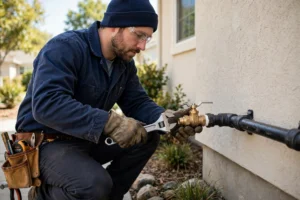
In most Fairfield homes, the main shutoff sits in one of a few places. Start at the front of the house, near where the water line enters from the street. Common spots include:
- On the front exterior wall, near the hose bibb or the water meter box.
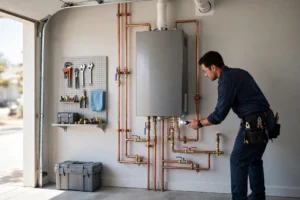
- Inside the garage, on the wall closest to the street.
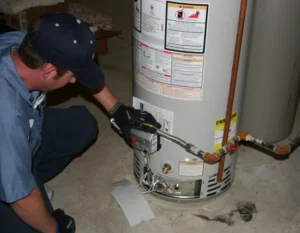
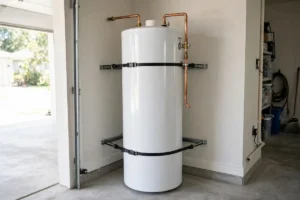
- In a utility closet or laundry area, near the water heater.
- Under the house in a crawlspace access, for older raised-foundation homes.
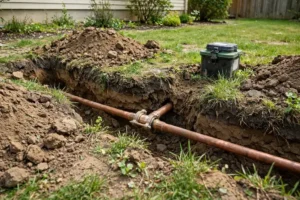
- In a ground-level valve box near the sidewalk, sometimes shared with the meter shutoff.
There are often two valves: one at the street meter, owned by the water provider, and one for the house itself. The house shutoff is the one you want. If you find only the meter valve, that can shut the house off too, but it may need a special key, and the provider prefers that homeowners use their own house valve where one exists.
Two Valve Types: Gate and Ball
Older homes usually have a gate valve: a round wheel handle that you turn several times to close. Newer homes usually have a ball valve: a lever handle that turns a quarter turn, so the handle sits across the pipe when closed and along it when open. Ball valves are easier to use and less likely to seize, which is one reason plumbers recommend replacing a failing gate valve with a ball valve during other work.
To close a gate valve, turn the wheel clockwise until it stops. To close a ball valve, turn the lever a quarter turn until it sits at a right angle to the pipe. After closing either type, open a tap to confirm the water has stopped and to drain pressure from the lines.
Test It Now, Not During an Emergency
Valves seize when they sit untouched for years. Test yours twice a year: close it, confirm the water stops, then open it fully again. If it is stiff, do not force it with pliers or a wrench, which can snap the stem and create a new leak. A stiff valve is a small job for a plumber now and a crisis later.
While you are there, label it. A small tag that says “Main Water Shutoff” helps anyone in the house, including a guest or a housesitter, act fast. Show every adult in the home where it is and how it turns, and keep a flashlight nearby if the valve sits in a dark corner or a crawlspace.
Fixture Shutoffs: The Smaller Valves Worth Knowing
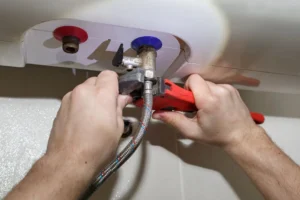
Beyond the main valve, most fixtures have their own shutoffs: small oval or lever handles on the supply lines beneath sinks and behind toilets, and a valve near the water heater. Knowing these lets you stop water to one fixture without shutting off the whole house, which is handy for a running toilet or a dripping faucet that can wait until morning.
Test fixture valves the same way as the main valve, gently and twice a year. The small valves under sinks seize just as readily as the main one, and they are the ones you will reach for most often. If a fixture valve will not move, leave it alone and mention it during your next plumbing visit rather than forcing it.
When a Pipe Bursts: The First Moves
If a pipe bursts, the order is simple: shut off the main water, then deal with the water. Move valuables and electronics out of the way, mop or towel up what you can, and open a tap at the lowest point to drain the lines. If water is near electrical outlets, panels, or appliances, stay clear of the water and do not touch electrical equipment while standing in it.
Then call a plumber and describe what happened: where the burst is, whether the water is stopped, and how much water escaped. That detail helps the plumber bring the right parts. Our burst pipe repair team handles this work, and if the situation feels unsafe or you cannot stop the water, our emergency plumber page explains what counts as urgent and what to do first.
Gas Smells Are a Different Job
One boundary matters: water shutoffs are a homeowner job, but gas is not. If you smell gas, hear hissing near a gas line or meter, or feel unwell near a gas appliance, leave the building, avoid flipping switches or using phones inside, and call your gas utility from outside. Do not try to find or fix a gas leak yourself, and do not turn gas equipment back on after an incident without the utility’s say-so.
Call Expert Plumbing in Fairfield
Found a stuck valve, or want a plumber to check your shutoff during other work? Call +1 707 574 9715 for a free estimate. We are open 09:00 to 17:00 daily, and we are glad to make sure your home can be shut off quickly when it counts.