Common Water Heater Problems in Fairfield: No Hot Water, Rumbling, and Leaks
A water heater usually fails in one of three ways: it stops making hot water, it starts making strange noises, or it starts leaking. Each symptom points to a different part of the system, and knowing which one you have makes the fix faster and cheaper. This guide covers the most common problems Fairfield homeowners see, why Fairfield’s hard water makes some of them worse, and when a repair makes sense versus a replacement.
No Hot Water at All
When every tap runs cold, start with the basics. On a gas heater, check whether the pilot light is out or the gas supply is interrupted. On an electric heater, check the breaker and the reset button on the thermostat. A tripped breaker or a pilot that went out after a gusty day is a quick fix, and it does not mean the heater is dead.
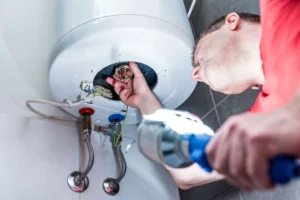
If power and gas are fine, the trouble is usually inside: a failed heating element on an electric unit, a faulty thermostat, or a gas control valve that has stopped responding. These are parts a plumber can test one by one. Replacing the failed part is often far cheaper than replacing the whole heater, especially on a unit that is still within its expected life.
One pattern to watch: hot water that runs out much faster than it used to. That often means sediment has built up inside the tank, leaving less room for hot water, or that one of two heating elements has failed so only half the tank heats. Both are fixable, and both are worth checking before deciding the heater is finished.
Rumbling, Popping, and Knocking Sounds
A water heater that rumbles or pops when it heats is almost always talking about sediment. Fairfield’s hard water leaves mineral deposits inside the tank, and when the burner or element heats through that layer, trapped water flashes to steam and makes noise. The sound itself is not dangerous, but the sediment behind it is: it insulates the bottom of the tank, forces the heater to work harder, and shortens its life.
Flushing the tank clears loose sediment and is the first step for a noisy heater. A plumber can also check the anode rod, a metal rod inside the tank that sacrifices itself to protect the tank walls from corrosion. When the rod is used up, the tank itself starts corroding, and that is when leaks follow. Replacing a spent anode rod is a small job that can add years to a tank.
Knocking in the pipes, rather than the tank, is a different problem. It usually comes from water pressure changes or loose pipes, and a plumber can trace the sound to its source. Do not ignore persistent knocking: it stresses joints and can loosen fittings over time.
Leaks: Tank, Fittings, or Relief Valve?
Where the water comes from tells you what to do. Water at a pipe joint or fitting is usually a connection problem and is often repairable. Water from the temperature and pressure relief valve, the small valve with a discharge pipe on the side of the tank, can mean the valve is faulty or the system pressure is too high. Water from the tank body itself, especially from the bottom seam, usually means the tank has corroded through, and that heater needs replacing.
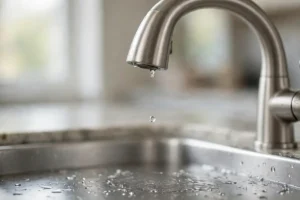
Any leak deserves a quick response. Even a slow drip can damage flooring, feed mold, and waste a surprising amount of water over weeks. Put a bucket under it, note where the water appears, and call a plumber with that detail: the location of the leak shapes the fix.
Discolored or Smelly Hot Water
Rusty or brown hot water that clears after running a while often points to sediment or an aging tank interior. If only the hot water smells, like rotten eggs, the cause is usually bacteria reacting with the anode rod, and changing the rod type can solve it. If both hot and cold water smell, the source is more likely the water supply itself, and that needs a different check.
These symptoms are worth acting on rather than living with. Discolored water can stain fixtures and laundry, and a smell that appears suddenly can signal a change inside the tank that deserves a look.
Pilot and Ignition Problems on Gas Heaters
On a gas heater, the pilot light and the ignition system deserve their own check. A pilot that keeps going out can mean a dirty pilot assembly, a weak thermocouple, or a draft problem near the vent. A heater that clicks but never lights may have an igniter or gas valve issue. These parts are testable one at a time, and the fix is usually a single part rather than a new heater.
One safety note stands above the rest: if you smell gas near the heater, leave the area and call your gas utility from outside. Do not try to relight a pilot when gas is present in the room, and do not keep resetting a heater that has shut itself off again and again. A heater that trips its safety shutoff repeatedly is protecting you from a problem that needs a professional look.
Repair or Replace? How to Decide
Three questions frame the decision. First, how old is the heater? A unit near the end of its expected life that needs a major repair is often better replaced. Second, how big is the repair? A thermostat or element is a small job; a leaking tank is not repairable at all. Third, how is the heater performing overall? A unit that is noisy, slow, and rusty is telling you its time is near, even if it still heats.
For a fuller walkthrough of that choice, see our water heater repair vs replacement post. And for hands-on help with the heater itself, our water heater repair team can diagnose the problem and explain the options in plain terms.
Call Expert Plumbing in Fairfield
No hot water, a rumbling tank, or a leak you cannot place? Call +1 707 574 9715 for a free estimate. We are open 09:00 to 17:00 daily, and we are glad to check the heater and tell you honestly whether a repair or a replacement is the smarter move.