What to Do When a Pipe Bursts: First 30 Minutes (Fairfield Guide)
A burst pipe is a race against water, not a reason to panic
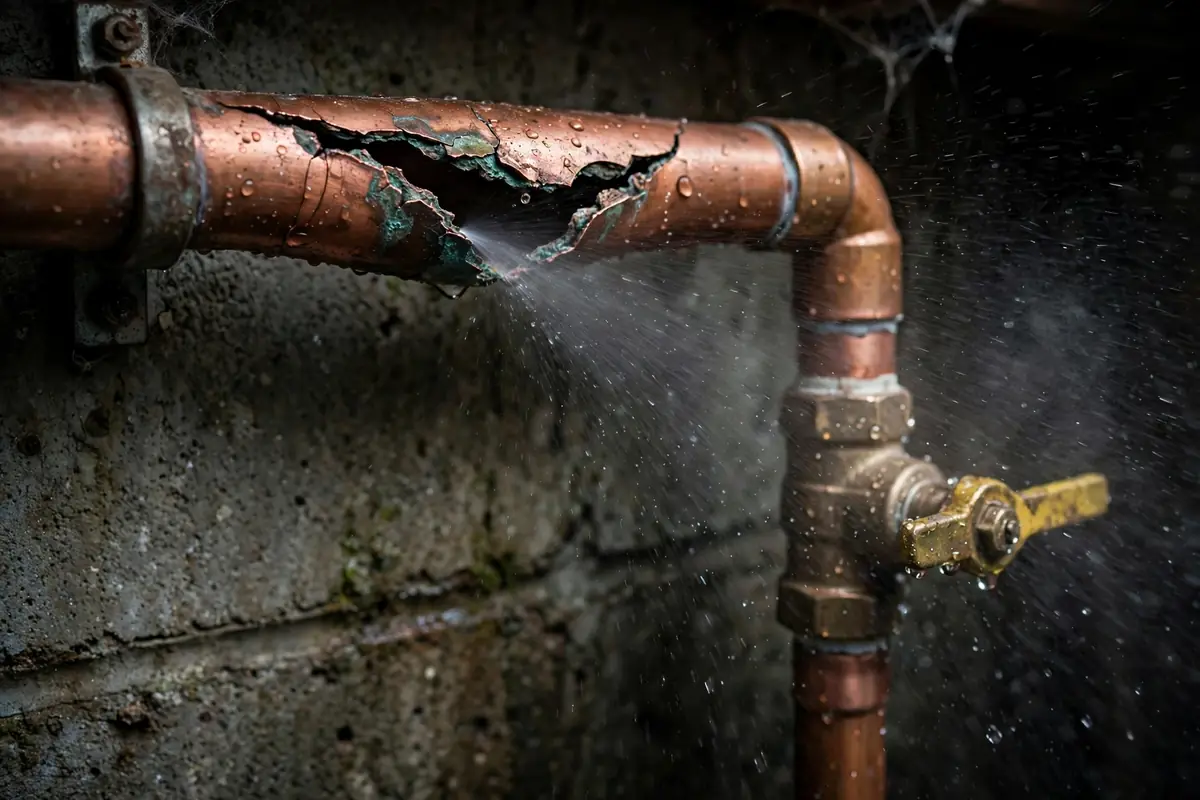
A burst pipe can release a large amount of water in a very short time, and the damage it causes depends less on the break itself than on how fast the water is stopped and how quickly the wet areas are handled. The first thirty minutes matter more than the next thirty hours, because every minute of flowing water soaks further into floors, walls, and belongings.
This guide gives you a simple sequence to follow in those first thirty minutes. It assumes you are safe, the water is clean supply water rather than sewage, and you can move around the home without risk. If water is near electrical outlets or panels, if the ceiling is sagging heavily, or if you smell gas, skip the steps that put you at risk and get to safety first.
Minutes 0 to 5: stop the water
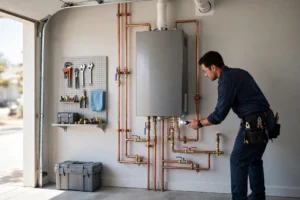
The single most important step is shutting off the water supply. Find your main shutoff valve before you need it, because searching for it during a flood wastes the minutes that matter most. The main shutoff is usually near the water meter, in the garage, or where the main line enters the home. Turn it clockwise until it stops. If the valve is stuck, do not force it until it breaks; use the shutoff at the street meter if you can reach it safely, and tell the plumber about the stuck valve when you call.
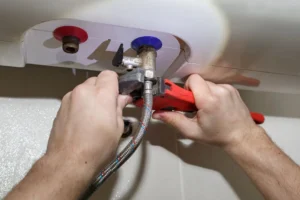
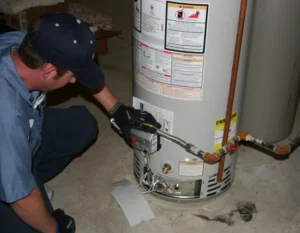
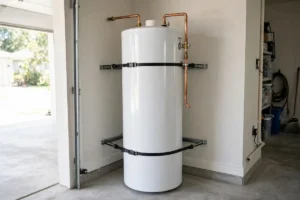
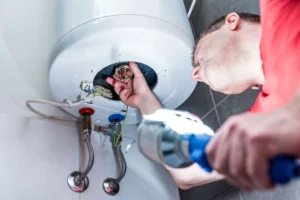
Next, deal with the water heater. If the burst is on the hot water side, or if you are unsure, turn off the water heater to prevent damage to the unit. For a gas unit, turn the gas control to the pilot or off position following the instructions printed on the unit. For an electric unit, switch off its breaker, but only if the breaker panel is dry and safe to reach. Never touch an electrical panel while standing in water.
Then, open a faucet or two at the lowest level of the home. This drains pressure from the lines and lets trapped water escape in a controlled way instead of through the break. If the burst is upstairs, open a downstairs tap. If the burst is in a wall, any open tap helps relieve pressure.
Finally, if water is spreading toward electrical outlets, appliances, or the breaker panel, stay clear of those areas. Water and electricity are a dangerous combination, and no belongings are worth the risk.
Minutes 5 to 15: protect what you can, and document everything
Once the water is off, the flow stops, but the water already released keeps spreading. Move rugs, electronics, boxes, and furniture out of the wet area if you can do so safely. Lift curtains and soft furnishings off the floor. If furniture is too heavy to move, place foil or plastic under the legs to slow moisture absorption.
Soak up standing water with towels, mops, or a wet vacuum if you have one. Start at the edges of the wet area and work inward, so you are not pushing water into dry rooms. Open doors between rooms to improve airflow, and if the weather allows, open windows in the wet area. Do not use a regular household vacuum on standing water, and do not turn on ceiling fans in a room with a sagging or soaked ceiling.
While you work, take photos and short videos of the break, the water spread, and any damaged belongings. Capture wide shots of each room and close shots of the damaged pipe and affected items. This record is useful for the plumber, and it is useful if you later speak with your insurer about the damage. Note the time you discovered the burst and the time you shut off the water, since that timeline matters for both.
Minutes 15 to 30: call for help, and say the right things
Now call a plumber. Call +1 707 574 9715 for burst pipe repair and an emergency plumber in Fairfield, CA, during business hours (09:00-17:00 daily). When you call, give the information that speeds up the response.
- Where the break is, as precisely as you can describe it: which room, which wall or floor, and whether it is a supply line or a drain.
- Whether the main water is off, and whether the water heater is off.
- What kind of water is involved: clean supply water, or sewage from a drain or sewer line. Sewage changes the safety precautions completely.
- How far the water has spread, and whether it has reached electrical areas, lower floors, or stored belongings.
- The age and material of the pipe if you know it, such as copper or galvanized steel, and whether this pipe has leaked before.
While you wait, keep the area ventilated and keep children and pets away from the wet zone. Do not try to repair the break yourself with tape, clamps, or sealants unless you are confident the line is fully depressurized and you understand the risk. A temporary patch that fails under pressure can restart the flooding while nobody is watching.
What not to do
A few common mistakes make a burst pipe worse.
- Do not wait to see whether the leak stops on its own. Supply line leaks do not seal themselves.
- Do not ignore a burst in a wall because the visible water seems small. Water inside a wall spreads along framing and soaks insulation, and the visible puddle is only part of it.
- Do not use heat or open flame to dry pipes or thaw a frozen section. That creates a fire risk and can damage the pipe further.
- Do not turn the water back on to test the break before a plumber has seen it. Restoring pressure to a broken line restarts the flooding.
- Do not throw away damaged items or the broken pipe section before documenting them. Photos first, cleanup second.
After the plumber arrives: repair, drying, and prevention
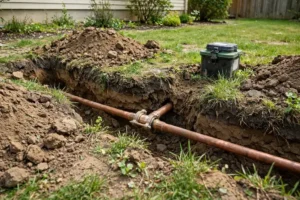
The plumber will confirm the break, explain the repair, and give you a written estimate before work begins. The repair itself may be a section replacement, a reroute, or a full line replacement if the pipe is failing in several places. Ask what caused the break, because the cause decides whether a spot repair is enough or whether the surrounding pipe needs attention too.
Drying matters as much as the pipe repair. Wet drywall, insulation, flooring, and subfloor need thorough drying to prevent mold and long term damage. Fans and dehumidifiers help, but soaked materials sometimes need removal. Ask the plumber what drying steps are needed and whether a restoration specialist is warranted for heavily soaked areas.
Prevention is worth a few minutes once the emergency passes. Learn the location of your main shutoff valve and make sure every adult in the home knows it too. Check the condition of older supply lines, especially in homes with original galvanized or aging copper piping, since those are the lines most likely to fail next. Watch your water pressure, because high pressure stresses every joint and fitting. And pay attention to the slow warnings: a small damp spot, a faint stain, or a bill that creeps up can all signal a leak that is still small enough to fix cheaply.
Not every leak is a burst. If your trouble is a slow, hidden leak rather than an open break, the signs and the steps are different. Read Why Is My Water Bill So High? Hidden Leaks in Fairfield Homes to learn how hidden leaks show up and how to confirm one with a simple meter test.
Know your shutoff before you need it
The cheapest flood protection in any home is knowledge: knowing where the main shutoff valve is, and making sure it works. Valves that sit untouched for years can seize, so test yours gently from time to time. If it is stuck or corroded, have it replaced on a calm day, not during an emergency. Show every adult in the home where the valve is and how to turn it, and keep the area around it clear of storage so it can be reached in seconds.
Two more habits pay off. First, note the location of individual fixture shutoffs, such as the valves behind toilets and under sinks, so a single fixture problem can be isolated without shutting off the whole home. Second, keep the plumber number somewhere visible, such as on the fridge or in your phone contacts, so the call in an emergency takes seconds rather than a search.
Call for urgent help
A burst pipe cannot wait for a convenient day, and the first thirty minutes decide how much damage follows. Call +1 707 574 9715 for burst pipe repair and an emergency plumber in Fairfield, CA, during business hours (09:00-17:00 daily). Shut off the water, protect what you can, document the damage, and let a plumber handle the repair.