
How to Turn Off the Gas to Your Fairfield Home: A Safety Guide
If you smell gas, hear gas escaping, or suspect a broken gas line, do not touch any valve or switch. Leave the house first and call for help from outside, away from the building. Do not flip light switches, use a phone inside the house, light anything, or go back inside to shut off the gas. A spark from a switch or a phone can ignite leaking gas. Your safety comes before the meter, the valve, and everything else in this guide.
This guide covers the other situation: no suspected leak, but you need to know where your gas shutoff is and how it works. The manual shutoff at the meter is a simple quarter-turn valve, safe to use only when it is safe to reach. Once gas is off at the meter, never turn it back on yourself; the utility or a qualified professional restores service and relights pilots.
If you are unsure about any part of your gas system, we can help during business hours. We are open 09:00-17:00 daily. Call +1 707 574 9715 to book a visit.
When to Leave First and Not Touch the Valve
The manual meter valve is for situations where it is safe to reach it, not for a suspected leak. Leave the house first and call for help from outside if any of these apply:
- You smell gas. Natural gas is given a rotten-egg smell so leaks can be detected. Any gas smell inside or near the house means leave first.
- You hear gas escaping. A hissing or roaring sound near a gas line, meter, or appliance means gas is escaping under pressure. Do not go closer.
- You see damage to a gas line. A line hit, bent, pulled loose, or exposed by digging or an earthquake may be leaking even if you cannot smell it yet.
- Someone feels ill. Headache, dizziness, nausea, or confusion in a home with gas appliances can be a sign of a gas problem. Get everyone outside into fresh air.
- The meter area is unsafe to reach. Fire, flooding, fallen debris, or a damaged structure between you and the meter means do not go there.
Our post on gas leak signs in Fairfield explains what to watch for.
Where the Manual Gas Meter Valve Is
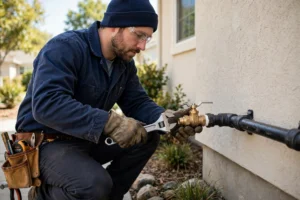
In most Fairfield homes, the gas meter sits outside, usually on an exterior wall near the front or side of the building, at about waist height. It is a metal assembly with pipes running into the house and a dial that records usage. The manual shutoff valve is on the pipe running into the meter from the street side, before the gas reaches the meter. Look for a flat metal bar or handle on that pipe.
Find your meter and valve on a calm day, before you ever need them. Note the meter’s location and whether anything blocks access to it. Bushes, stored items, or a locked gate can slow you down when time matters, so keep the path to the meter clear. If you rent, ask the property owner or manager where the meter is. If you cannot find a meter, or the valve looks corroded, painted over, or damaged, do not force it. Ask a professional to take a look during business hours.
How the Quarter-Turn Valve Works
Most residential gas meters use a quarter-turn shutoff valve. It has two positions, and the handle shows which one it is in. When the handle runs parallel to the pipe, the valve is open and gas is flowing. When the handle runs across the pipe, at a right angle, the valve is closed and the gas is off. A quarter turn moves it from one position to the other.
To turn the gas off, use a wrench that fits the flat valve handle and turn it a quarter turn until it sits across the pipe. The valve may be stiff if it has not been moved in years, so use steady pressure, not sudden force. If it will not move with reasonable effort, stop. Forcing a stuck valve can break it.
Remember the rule the other way: turning the handle back to parallel restores the flow. That is exactly why the do-not-restore rule matters. Turning the gas back on is not the reverse of turning it off. Once the gas is off, pilots are out and appliances need to be checked and relit in the right order. That work belongs to the utility or a qualified professional.
The Manual Valve vs the Automatic Earthquake Shutoff Valve
The manual meter valve and an earthquake shutoff valve are two different devices. The manual valve is a handle on the pipe at the meter that a person turns by hand. An earthquake shutoff valve is an automatic device on the gas line that senses strong shaking and shuts off the gas on its own.
The automatic valve is a safety device for earthquakes. It does not replace the manual valve, and the manual valve does not replace it. In an earthquake, it may already have shut the gas off before you reach the meter. After it has tripped, the same restoration rule applies: do not turn the gas back on yourself. The utility or a qualified professional checks the line and restores service. If your home lacks one, our earthquake shutoff valve installation service explains what the device does and how it is fitted.
What Happens After You Turn the Gas Off
Turning the gas off at the meter stops gas to the whole house at once. Every gas appliance goes out, from the water heater and furnace to the stove and dryer. That is the point of the shutoff, and why restoration is a careful job, not a quick flip of the handle.
After the gas is off, do not try to relight anything or turn the meter valve back on. Call the utility or a qualified professional and tell them the gas is off at the meter. They will check the lines, restore the supply, and relight pilots in the correct order. If the shutoff followed an earthquake, a repair, or suspected damage, they will confirm the lines are sound before the gas comes back.
For a planned repair, the same rule holds: the repairer or the utility arranges the restoration. Our gas line repair service covers repairs to gas piping in Fairfield homes, including work that starts with a meter shutoff.
When Not to Touch the Meter Valve
There are situations where the right move is to leave the valve alone, even if you know where it is:
- A suspected leak. Leave the house and call for help from outside. Do not operate the valve, a switch, or a phone inside the house.
- You cannot reach the meter safely. Fire, flood water, fallen debris, or structural damage between you and the meter means the valve is not worth the risk.
- The valve is damaged or corroded. A visibly cracked, heavily corroded, or leaking valve should not be forced. Report it to the utility or a qualified professional.
- You are unsure which valve it is. If several valves sit near the meter and you cannot tell which is the main shutoff, do not guess.
- The gas is already off. If the automatic earthquake valve has tripped, there is nothing to shut off; restoration belongs to the utility or a qualified professional.
When in doubt, leave and call for help from outside rather than operate a valve you are unsure about. No shutoff is worth an injury.
Gas Shutoff vs Water Shutoff
Many Fairfield homes have both a gas shutoff and a main water shutoff, and the two are easy to confuse under stress. The gas shutoff is at the gas meter, outside the house, and it stops gas to the whole home. The main water shutoff is usually at the water meter near the street or where the water line enters the house. Turning off the water does nothing for a gas problem, and turning off the gas does nothing for a burst pipe.
Learn both locations on the same calm day, so you can reach either one without hunting for it. Our companion guide on the main water shutoff in Fairfield explains where the water shutoff is and how it works.
The Bottom Line
Know where your gas meter is, know a quarter turn across the pipe shuts the gas off, and know the two rules that matter more: if you suspect a leak, leave first and call for help from outside, and once the gas is off, never turn it back on yourself. The utility or a qualified professional restores service and relights pilots.
Need Help in Fairfield?
If your gas meter valve is stuck, damaged, or hard to find, or you need gas line work done, we can help. We are open 09:00-17:00 daily. Call +1 707 574 9715 to book a visit.