Backflow Testing in Fairfield: What Property Owners Should Know
Backflow is water flowing in the wrong direction through a plumbing system: from a property back toward the public water supply. It is rare, but when it happens it can carry contaminants into drinking water. Backflow prevention devices are installed to stop that reverse flow, and backflow testing checks whether those devices still work.
This guide explains, in general terms, what backflow is, what kinds of devices exist, what a testing notice means, and what property owners should know about the process. It is informational only. It does not describe any particular testing service, and local requirements vary, so owners should confirm the rules that apply to their own property with their water provider.
What Backflow Is and Why It Matters
Under normal conditions, water flows from the public supply into a property at a higher pressure than the property’s internal plumbing. Backflow happens when that pressure relationship reverses. Two situations cause it:
- Backpressure: pressure inside the property rises above supply pressure, for example from a boiler, a pump, or an elevated tank, pushing water backward.
- Backsiphonage: supply pressure drops suddenly, for example during a main break or heavy firefighting demand nearby, creating a vacuum that pulls water backward.
Either way, water that has passed through a property’s plumbing, irrigation system, or equipment could be drawn back toward the supply. That is the risk backflow prevention exists to control. It is a public health measure, not just a property maintenance item.
Where Backflow Risk Comes From
Not every property carries the same risk. Risk rises with certain features:
- Irrigation systems: sprinkler lines sit in soil and can draw in fertilizers, pesticides, or standing water.
- Pools and spas: chemically treated water connected to a fill line is a cross-connection risk.
- Boilers and heating systems: treated heating water under pressure can push back into supply lines.
- Commercial and industrial equipment: processes using chemicals, detergents, or recycled water raise the hazard level.
- Fire sprinkler systems: stagnant water in sprinkler piping is a known cross-connection concern.
- Hose connections: a garden hose left submerged in a bucket, pool, or tank can siphon that water back if pressure drops.
A property with none of these features still has ordinary cross-connections, such as hose bibbs, but properties with the features above are the ones most often associated with prevention devices and testing notices.
Common Device Types
Several device types exist, matched to the hazard level of the connection. Understanding which type is installed on a property helps an owner understand what testing involves.
Atmospheric Vacuum Breaker (AVB)
The simplest device, often seen on individual hose bibbs or irrigation connections. It lets air into the line when pressure drops, breaking the siphon. AVBs are inexpensive and simple, but they protect only against backsiphonage, not backpressure, and they must be installed above the highest downstream outlet.
Pressure Vacuum Breaker (PVB)
A step up from the AVB, used commonly on irrigation systems. It also guards against backsiphonage, and it includes a check valve plus an air inlet. Like the AVB, it does not protect against backpressure, and it is typically installed outdoors above ground.
Double Check Valve Assembly (DCVA)
Two check valves in series, used where the hazard is moderate and backpressure is possible but the substances involved are not highly toxic. The redundancy means one valve can fail and the other still holds. DCVAs are common on commercial properties and on some residential fire sprinkler connections.
Reduced Pressure Zone Assembly (RPZ)
The highest level of protection among these types. It uses two check valves plus a relief valve that discharges water if either check valve fails, making a failure visible rather than silent. RPZ devices are used for high-hazard connections, such as chemical or industrial uses, and they require a drain location because the relief valve can discharge water.
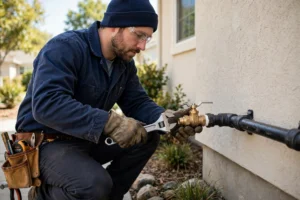
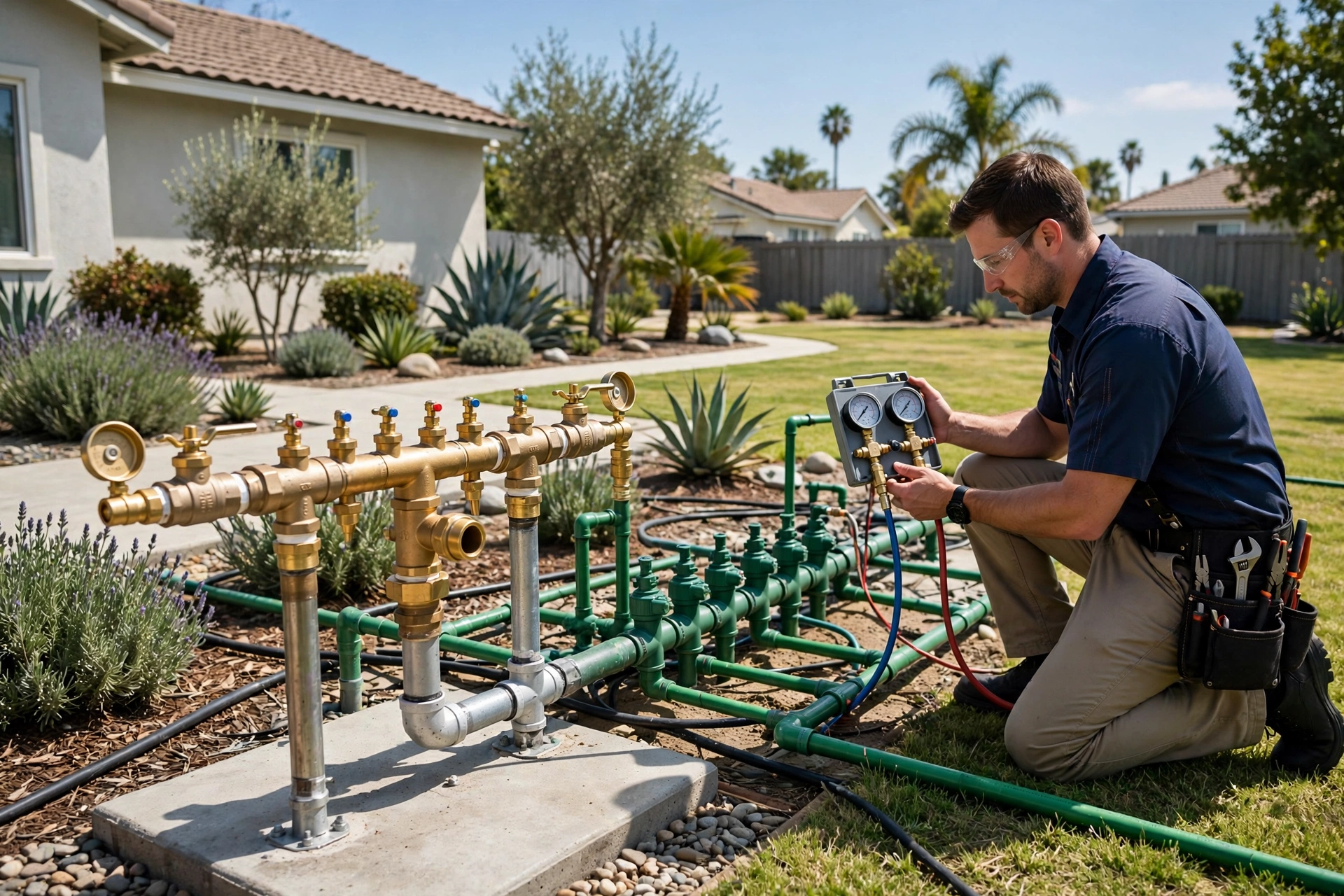
The device type on a property is chosen based on the hazard level of the connection. An owner who does not know which device they have can usually find it near the water meter or at the irrigation or equipment connection, often as a brass assembly with test ports.
What a Testing Notice Means
Some property owners receive a notice about backflow testing from their water provider. In general terms, such a notice means the provider’s records show a prevention device on the property, and the device is due for a test to confirm it still functions. Notices commonly arrive on a recurring schedule, and they usually name the device location and a deadline for submitting results.
Receiving a notice is routine, not a sign of a problem. It means the device is on record and the provider is tracking its condition. Ignoring a notice, however, can lead to follow-up letters and, in some systems, further action by the provider, so owners should treat the deadline as real and keep a copy of any submitted results.
What Testing Involves, in General
Testing a backflow device means checking that its internal valves open, close, and seal at the correct pressures. A tester connects a gauge to the device’s test ports, runs water through it in a controlled sequence, and records the readings. The test checks each check valve independently and, for an RPZ, the relief valve as well.
A device passes when all valves perform within their expected ranges. A device fails when a valve leaks, sticks, or does not hold pressure. A failed device usually needs repair or replacement of internal parts, followed by a retest. Testing does not alter the plumbing beyond the test itself, and it does not require digging or opening walls in most cases, since devices are typically accessible above ground.
Owners can prepare for a test by making sure the device is accessible, clearing vegetation or stored items around it, and locating any prior test records. Knowing the device type and location before the visit saves time.
Owner Responsibilities: A Practical Summary
- Know whether you have a device and where it is located on your property.
- Read testing notices carefully and note the deadline and the submission instructions.
- Keep test records from prior years, since they show the device’s history and help identify a developing problem.
- Protect the device from freezing, physical damage, and burial under landscaping, since damage can cause a test failure.
- Do not remove or bypass a device without understanding the consequences. A device is there because the connection was assessed as a risk, and removing it can create a compliance problem.
- Report visible problems such as a relief valve discharging continuously or a device leaking, rather than waiting for the next test cycle.
Common Owner Questions
Does every home need a backflow device? No. Many ordinary homes have no dedicated device beyond standard fixture protections. Devices appear where a cross-connection hazard was identified, such as an irrigation system or a pool fill line.
How often is testing done? Schedules vary by water provider and by device type. Some systems test on a recurring cycle, while others test on installation and after repairs. The notice or the provider’s guidance for the property gives the applicable schedule.
What happens if a device fails? In general, the device is repaired or its internal parts are replaced, and then it is retested. The goal is a passing device, not a penalty, and a failed test is a finding about the device, not about the owner.
Can an owner test their own device? Testing requires specialized gauges and training, and most water providers require results from a qualified tester. Owners should check their provider’s requirements rather than assuming a self-test counts.
Where to Learn More
For the prevention side of this topic, including how devices are selected and installed, see the backflow prevention service page. For questions about a specific notice, device, or deadline on your property, your water provider is the authoritative source, since requirements and schedules are set locally.
Call a Fairfield Plumber With Backflow Questions
If you have questions about a backflow device or a testing notice at your Fairfield property, call +1 707 574 9715. We are available 09:00 to 17:00 daily. A plumber can help you understand what you have installed and what your notice means. Call +1 707 574 9715 today.