Toilet Needs Two Flushes? Weak Flush Causes in Fairfield Homes
A toilet that needs two flushes is not just an annoyance. It is a symptom with a short list of causes, and each cause points to a different fix. The flush feels weak because the bowl is not getting enough water, fast enough, in the right places — or because something downstream is slowing the waste on its way out. This guide works through the four causes in diagnostic order: tank water level, rim and siphon jets clogged with mineral scale, flapper timing, and a partial blockage.
This post is about flush power only. A toilet that keeps running after it flushes is a different problem, covered in our post on toilet that keeps running in Fairfield.
If you have worked through the checks below and the flush is still weak, we can take a look. We are open 09:00-17:00 daily. Call +1 707 574 9715 to book a visit.
First, Watch One Flush Closely
Before you touch anything, watch a full flush. Does the tank empty quickly and completely? Does water swirl strongly around the bowl, or dribble in weakly from the rim? Does the second flush work while the first fails? A tank that empties slowly points to the tank; weak water at the rim points to the jets; a bowl that clears only on the second flush points to the flapper or a partial blockage; a toilet that is weak and slow to drain points downstream.
Cause 1: The Tank Water Level Is Too Low
A flush works because a set volume of water drops from the tank into the bowl in a few seconds. If the tank water level is low, the flush starts with less water and less force. This is the first thing to check because it is the easiest to see and fix.
Lift the tank lid and look at the water level. Most tanks have a fill line marked inside, about an inch below the top of the overflow tube. If the water sits well below that line, the tank is under-filling. The usual reason is the fill valve setting: the float is set too low, so the valve shuts off early. Many fill valves adjust with a screw or a clip on the float arm, and raising the float raises the water level. Adjust it a little at a time and flush to test.
Also check that the tank is refilling fully between flushes. If the fill valve is slow or the supply valve under the toilet is only partly open, the tank may still be refilling when you flush a second time. Open the supply valve fully and give the tank time to fill. If the water level is correct and the flush is still weak, the problem is not the tank volume.
Cause 2: Rim and Siphon Jets Clogged with Mineral Scale
This is the Fairfield cause. The rim jets are the small holes under the rim of the bowl, and the siphon jet is the larger hole at the bottom. During a flush, water rushes through the rim jets to swirl the bowl and through the siphon jet to push waste down the trap. When those holes narrow, the same tank of water enters the bowl more slowly and with less force, and the flush turns weak.
Fairfield’s hard water is what narrows them. Dissolved calcium and magnesium drop out of the water as a hard mineral crust, and the small holes under the rim are exactly where that crust builds up first. Fairfield plumbers describe this directly: hard water can clog the small holes under the rim and the jet at the bottom of the bowl, and clearing the mineral buildup from the jets restores a strong flush. That is a water-chemistry story, not a defect in the toilet.
You can check this without tools. Look under the rim with a small mirror and a flashlight. If the holes look crusted white or partly closed, scale is a likely contributor. A stiff brush can clear loose surface buildup, but be gentle: the porcelain chips easily. Clearing the jets is general maintenance, not a guaranteed fix, and a heavily scaled siphon jet is usually a job for a plumber. For the wider picture, see our post on hard water signs in Fairfield homes.
Cause 3: The Flapper Closes Too Fast
The flapper is the rubber disc at the bottom of the tank that lifts when you press the handle and drops back to seal the tank. It needs to stay open long enough for the tank to empty. If it drops too soon, the flush gets cut short: the tank still holds water, the bowl gets a half-flush, and you reach for the handle again.
The most common reason is the chain. If the chain between the handle and the flapper is too short, it can pull the flapper back down early. If it is too long, it can slip under the flapper and hold it open, which causes a running toilet instead. The chain should have a little slack, about half an inch, so the flapper lifts fully and falls on its own timing.
The other reason is the flapper itself. A flapper that has gone soft, warped, or waterlogged may not stay up, and one that is the wrong size for the flush valve has the same effect. If you replace it, take the old one with you to match it. Test the timing directly: hold the handle down during a flush. If that produces a full flush, the flapper is closing too early. If it makes no difference, the flapper is not your problem.
Cause 4: A Partial Blockage in the Trap or Beyond
A partial blockage slows the flush from the other end. The bowl gets its full rush of water, but the waste meets resistance in the trap — the curved passage at the base of the toilet — or further down the drain. The first flush moves the blockage a little; the second flush finishes the job. Over time, the blockage grows and the second flush stops working too.
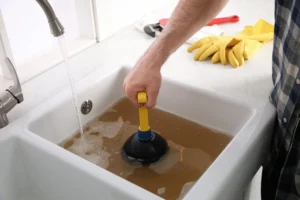
The signs of a partial blockage are different from the other causes. The bowl water may rise higher than usual before draining, drain slowly after the flush, or gurgle. Other fixtures may be affected: if a sink or tub drains slowly at the same time, the blockage is further down the line, not in the toilet. A plunger sometimes clears a blockage in the trap itself, if the blockage is soft and close to the bowl. Use a flange plunger, the kind with the extra rubber lip that seals the bowl outlet, and plunge with steady pressure rather than violent force.
If plunging does not help, or if the blockage keeps coming back, the cause may be further down the drain, where a plunger cannot reach it. Our post on repeat drain clogs in Fairfield covers the causes that keep returning. Do not keep flushing a toilet that is barely clearing: repeated flushes against a blockage are how a weak flush turns into an overflow. Do not pour a chemical descaler into the bowl and leave it, either — gentle mechanical clearing is the safe first step.
What to Check in Order
Work through the four causes in this order, and stop when the flush recovers:
- Tank level. Lift the lid, check the water against the fill line, and raise the float if the level is low. Flush and test.
- Rim and siphon jets. Look under the rim for white mineral crust. Clear loose buildup gently, and call a plumber if the siphon jet is heavily scaled.
- Flapper timing. Hold the handle down during a flush. If that fixes it, adjust the chain slack and check the flapper’s condition.
- Partial blockage. Try a flange plunger once, and watch whether other fixtures drain slowly too. If the blockage returns, it needs a professional look.
When to Call a Plumber
Call a plumber when the flush stays weak after the tank level, chain, and jets have been checked, when the blockage keeps coming back, when bowl water rises instead of draining, or when more than one fixture drains slowly. Those signs point past the toilet and into the drain, where the fix needs proper equipment.
If the weak flush turns out to be a worn-out toilet rather than a fixable fault, our toilet installation service covers replacement for Fairfield homes.
The Bottom Line
A toilet that needs two flushes is telling you something specific. Low tank water, mineral scale in the rim and siphon jets, a flapper that closes too soon, or a partial blockage each leave a different fingerprint, and checking them in order finds the cause without guessing. In Fairfield, check the scale branch early: hard water clogs those small jet holes faster here. We are open 09:00-17:00 daily. Call +1 707 574 9715 to book a visit.