When to Call an Emergency Plumber (and What Can Wait Until Morning)
First, an honest note about hours
This site’s plumbing team works business hours, 09:00-17:00 daily. That matters for how you use this guide: it does not promise a visit outside those hours, and you should not wait by a flooding home hoping for a visit that is not offered. What this guide does is separate problems that need immediate safety action from problems that can safely wait until business hours, so you act correctly in both cases.
The distinction is simple. Some plumbing problems threaten safety or are actively damaging your home right now. Those need immediate action from you, and, where gas or sewage is involved, from emergency services. Other problems are unpleasant but stable, and they can wait until the morning without getting worse, provided you take the simple holding steps below.
Act immediately: flooding or a burst pipe
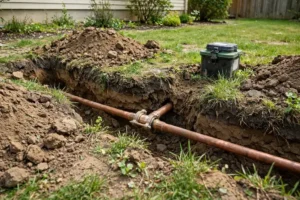
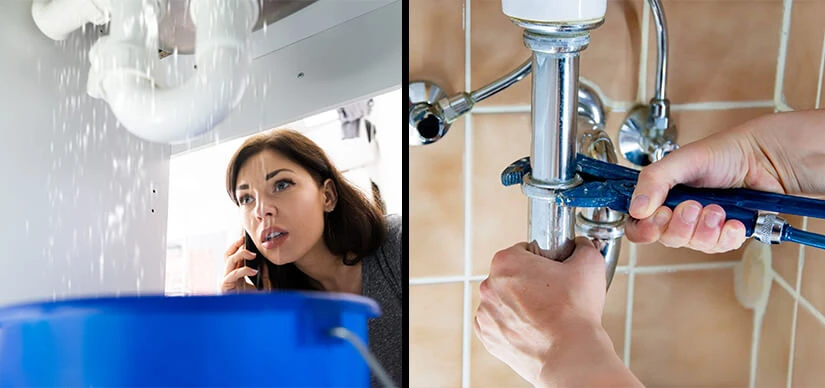
Water pouring into your home is an emergency in the practical sense, because every minute adds damage to floors, walls, and belongings. If a pipe has burst or a fitting has failed and water is flowing freely, your first job is to stop it: shut off the main water supply to the home, if you know where the shutoff is and can reach it safely. Then move belongings out of the water, mop or contain what you can, and note where the break is.
Once the water is stopped, the situation becomes stable, and the repair can be arranged during business hours. If you cannot find or reach the shutoff, or if water is near electrical outlets or panels, keep clear of the water and call for emergency help rather than wading in. Our guide to what to do when a pipe bursts walks through the shutoff and containment steps in detail.
Act immediately: the smell of gas
A gas smell is a safety emergency, not a plumbing inconvenience. If you smell gas, or rotten eggs, near an appliance or anywhere in the home, leave the home immediately with everyone, including pets. Do not flip switches, use a phone inside, or try to find the leak. Call your gas utility’s emergency line or 911 from a safe location outside the home, and do not go back inside until responders or the gas utility say it is safe.
Gas line repair itself is arranged once the home has been made safe, during business hours. The emergency part is the leaving and the calling, and it should never wait for a plumber’s visit.
Act immediately: sewage backing up into the home
Sewage backing up through a toilet, tub, or floor drain is both a health hazard and a sign of a serious blockage or main line failure. Stop using water in the home at once, because every flush or running tap adds to the backup. Keep children and pets away from the affected area, avoid contact with the water, and ventilate the room if you can do so without entering the contaminated area.
If sewage is spreading or you cannot stop the inflow, the immediate step is containment and protection, not diagnosis. A sewage backup should be treated as urgent: arrange help at the earliest available business hours, and sooner through emergency services if the backup is extensive or if anyone is at health risk.
Act immediately: water near electricity, or no water at all with a leak
Water reaching electrical outlets, panels, or appliances is dangerous, and the right move is to keep away and cut power only if you can do so safely from a dry location. Do not step into standing water to reach a panel. If you cannot cut power safely, call for emergency help.
A home with no running water at all deserves a quick check before you decide it can wait. If the loss of water comes with a visible leak, a burst pipe, or sewage, it belongs in the act-immediately group. If the whole street is affected, the cause may be a municipal supply issue, and your water provider is the right first call.
What can usually wait until business hours
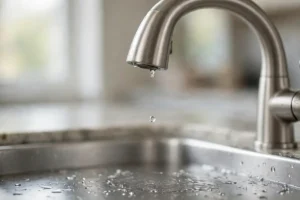
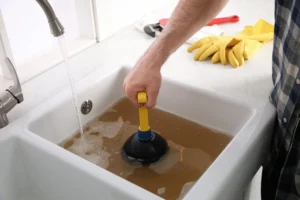
Many plumbing problems feel urgent at night but are stable enough to wait until the morning, provided you take a holding step. A slow drip under a sink can wait if you place a bucket, turn off the supply valve to that fixture, and keep the area dry. A running toilet can wait if you turn off its supply valve and use another bathroom. A slow drain can wait if you stop using that fixture and avoid chemical drain cleaners, which can damage pipes and make a later repair harder.
Other wait-until-morning problems include a single fixture with low pressure, a noisy pipe that is not leaking, a dripping outdoor tap, a water heater that is not producing hot water but is not leaking, and a minor leak from a fixture supply line that you have isolated with its shutoff valve. In each case, the holding step is the same: isolate the fixture, contain any water, and avoid using the affected fixture until it is repaired.
Holding steps that keep a wait safe
- Find the fixture shutoff valve, usually under a sink or behind a toilet, and turn it off for the affected fixture.
- Place a bucket or towels under a slow drip, and check it before bed and first thing in the morning.
- Do not use a backed-up or slow drain, and do not pour chemical cleaners into it.
- For a running toilet, turn off the toilet supply valve and leave the lid down.
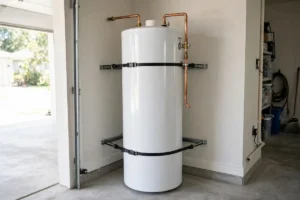
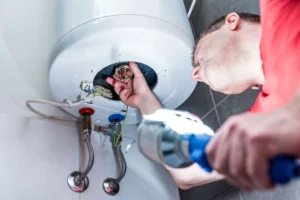
- For a water heater with no hot water and no leak, leave it alone and note any error lights or unusual sounds to report.
- Keep the area dry and ventilated, and move anything that water could damage.
If a holding step fails, if the problem spreads, or if you discover a second problem, such as a leak you had not noticed, reassess. A problem that was stable can become urgent, and the safety steps above take over.
How to decide at 2 a.m.
Ask three questions. Is anyone unsafe right now, because of gas, sewage, or water near electricity? Is water actively damaging the home, because a pipe is flowing freely? Can I stop the water or isolate the fixture? If anyone is unsafe, leave and call emergency services. If water is flowing freely, shut off the main supply if you can do so safely. If you can isolate the fixture and contain the problem, it can wait until business hours, and you will get a clearer-headed, better repair in the morning.
Write down what happened and when, what you shut off, and what you observed. That note helps the plumber diagnose faster when they arrive, and it stops a stressful night from turning into a vague description in the morning.
What to tell the plumber when you call
Whether you call during business hours for a repair that waited overnight, or for a problem you found in the morning, a clear description gets you a faster, better visit. Say what happened and when it started, what you shut off, and whether the problem is still active. Mention any safety steps you already took, such as leaving the home for a gas smell or shutting off the main supply for a burst pipe, and say whether emergency services attended.
Also mention anything that changed recently: new appliances, recent plumbing work, heavy rain, or a fixture that has been slow for weeks. Patterns help diagnosis. A drain that has been slow for a month before it backs up points to a different cause than a drain that failed suddenly, and a water heater that has been noisy for weeks before it stops heating points to a different fault than one that failed without warning. The more specific your account, the less time the visit spends on discovery and the more it spends on repair.
Call an emergency plumber during business hours
For flooding, gas smell, or sewage backup, take the safety steps above immediately. For repairs, including urgent repairs that have been stabilised overnight, call +1 707 574 9715 during business hours (09:00-17:00 daily) about an emergency plumber in Fairfield. Tell us what happened, what you shut off, and whether the problem is still active, and we will help you plan the repair.
Related reading: what to do when a pipe bursts and a high water bill from hidden leaks.