Why Does My Fairfield Tap Water Taste Metallic or Bad?
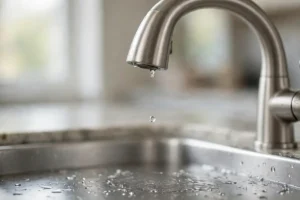
Water that tastes wrong is hard to ignore, because every glass and every cup of coffee carries the taste with it. The cause is usually one of a small set of suspects: iron or other metals from the pipes, chlorine from treatment, earthy tastes from algae in the source water, or sediment stirred up in the plumbing. This guide helps you narrow it down with a simple diagnostic split, and explains which tastes need water testing and a call to the water provider rather than a home fix.
The safety boundary first: taste alone does not prove a health risk. A bad taste can come from harmless minerals, from chlorine that is part of normal treatment, or from the pipes in your own home. It can also be a sign of something that needs testing. This post cannot diagnose whether your water is safe, and it does not try. If the taste is a persistent metallic taste, or any chemical or fuel taste, get the water tested and contact your water provider. Do not rely on taste, or on this guide, as a safety verdict.
If the taste is a plumbing problem — old pipes, sediment, or a filtration question — we can take a look. We are open 09:00-17:00 daily. Call +1 707 574 9715 to book a visit.
The Diagnostic Split: Run These Three Tests
Before guessing at a cause, run three simple checks. They cost nothing, and they separate the branches cleanly.
One tap or the whole house? Taste the water at the kitchen tap, then a bathroom tap, then an outside tap. If only one tap tastes bad, the cause is in that tap or its supply line, not in the water coming into the house. If every tap tastes the same, the cause is in the incoming water or in plumbing shared by the whole house.
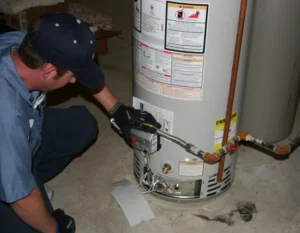
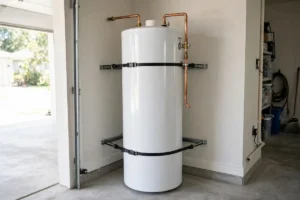
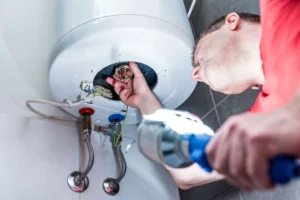
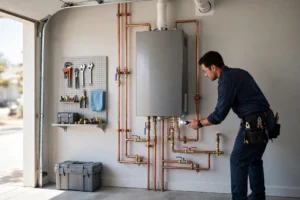
Hot or cold? Taste the cold water, then the hot water. If only the hot water tastes bad, the cause is in the water heater or the hot pipes. If only the cold tastes bad, the cause is in the cold supply. If both taste the same, the cause is upstream of the heater.
Does it clear after flushing? Let the tap run for a minute or two and taste again. If the taste fades after the tap has run, the cause is water that has been sitting in the pipes, and the standing water was the problem. If the taste stays the same no matter how long the tap runs, the cause is in the incoming water itself.
Write down the answers before you move on. “Whole house, hot and cold, does not clear” points to a very different cause than “one tap, cold only, clears after flushing”, and the fix follows the answers.
Metallic Taste: Iron and Old Pipes
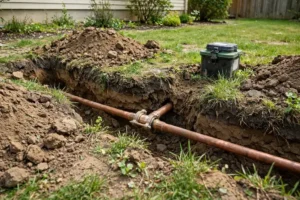
A metallic taste is the most common complaint, and iron is the usual suspect. Iron gets into tap water from corroding iron or steel pipes, from sediment in the water heater, or from iron in the source water itself. Culligan of Napa Valley, which serves Fairfield, lists iron as a common local water problem, noting the metallic taste that comes with elevated iron. Ameca Plumbing, which works across Northern California including Solano County, lists metallic taste and iron among the common water problems in the region. Benjamin Franklin Plumbing Bay Area notes the same pattern: water that smells or tastes metallic can indicate internal corrosion or sediment.
Fairfield’s hard water makes this worse in an indirect way. Hard water leaves mineral scale inside pipes and heaters, and scale traps sediment and speeds up corrosion in older pipe stock. The taste often gets stronger after the water has been sitting still in the pipes overnight.
If the metallic taste is only at one tap, the cause is often that tap’s supply line or the faucet. If it is whole-house and it clears after flushing, the cause is water standing in the pipes. If it is whole-house, hot and cold, and does not clear, it needs testing: the iron could be coming from the incoming supply, and only a test shows where it is coming from.
A metallic taste together with brown or rusty water points to sediment and corrosion. Our post on brown water from the faucet in Fairfield covers that branch in detail.
Chlorine Taste: Treatment, Not a Fault
A swimming-pool taste is usually chlorine, which water providers add to disinfect the supply. It is most noticeable when the water is cold and fresh from the tap, and it often fades if the water sits in an open jug in the fridge. Chlorine taste varies with the season and with how far your home is from the treatment plant, so it can come and go without anything changing in your plumbing.
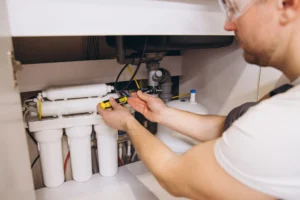
Chlorine taste is a nuisance rather than a plumbing fault, and it is the branch most easily fixed at the tap. A whole-house or point-of-use filter that removes chlorine will take the taste out. Our whole-house water filtration service covers filtration for Fairfield homes. If the chlorine taste is suddenly much stronger than usual and does not fade, contact the water provider.
Earthy or Musty Taste: Algae in the Source Water
An earthy, musty, or soil-like taste usually comes from algae in the source water, and it is seasonal. Warm weather and low reservoir levels favour the algae behind the taste, and Fairfield’s surface sources — Lake Berryessa and the Sacramento Delta — follow the same seasonal pattern as any surface supply. The taste can appear for a few weeks and then fade on its own.
An earthy taste that affects the whole house, hot and cold, and does not clear after flushing is most likely a source-water taste. Filtration can reduce it, but the first step is to confirm that the taste is not coming from your own plumbing. If the taste is only at one tap, or only in the hot water, the source-water explanation does not fit, and the cause is closer to home.
Sour, Chemical, or Fuel Taste: Get It Tested
Some tastes are a testing matter, not a diagnosis matter. A persistent metallic taste that does not clear after flushing, any chemical taste, any fuel or solvent taste, or any taste that arrived suddenly and strongly should be treated as a reason to test the water and contact the water provider. This post does not diagnose the safety of those tastes, and no home test strip can settle the question.
When you contact the provider, describe the taste, say whether it is one tap or whole-house, hot or cold, and whether it clears after flushing. That is the same diagnostic split above, and it is the information the provider needs. Keep a sample if the provider asks for one, and do not drink water that tastes of chemicals or fuel while you wait for results.
What Hard Water Has to Do with Taste
Hard water itself has a taste — flat, chalky, or mineral — but it is not the same as a metallic taste or a chlorine taste. Fairfield’s water is hard, and the mineral load contributes a background taste some people notice and some do not. A water softener changes that mineral taste, because it removes the calcium and magnesium that make water hard. Our water softener installation service covers that option, and our post on hard water signs in Fairfield homes covers the wider symptoms.
But a softener is not a filter: it does not remove chlorine, iron, or earthy tastes, and buying one to fix a taste problem that is really chlorine or iron will not help. Match the fix to the branch your diagnostic split pointed to: softening for hardness, filtration for chlorine and earthy tastes, pipe or heater work for a metallic taste coming from your own plumbing, and testing plus the provider for anything chemical or persistent.
Taste vs Smell: Different Symptoms
Taste and smell are related but they are not the same symptom, and they do not always share a cause. A sulphur smell with no bad taste points to a different branch than a metallic taste with no smell. If your water smells as well as tastes bad, our post on why water smells in Fairfield covers the smell branches.
The Bottom Line
Run the three checks first: one tap or whole house, hot or cold, and whether it clears after flushing. A metallic taste points to iron and older pipes, a chlorine taste points to treatment, and an earthy taste points to seasonal algae. A persistent metallic taste, or any chemical or fuel taste, is a testing matter: get the water tested and contact the water provider, and do not treat taste alone as proof that the water is safe or unsafe. We are open 09:00-17:00 daily. Call +1 707 574 9715 to book a visit.